
Discover the Joy of Pack Canoes in the Adirondacks

Updated: Apr 26

Six in the morning. The St. Regis Canoe Area. Not a soul on the water. You lift your boat off the car, all 24 pounds of it, and walk to the put in. You step in with ease and push off. Your double blade propels you forward effortlessly. The bow tracks straight without thinking about it. An hour later, you're somewhere most people never get to, with room for your gear, your coffee, and the kind of quiet worth driving hours for.
That's a pack canoe. Once you've paddled one on the serene waters of the Adirondacks, you'll never look back.
What Is a Pack Canoe?
A pack canoe is a solo boat with an open hull, no cockpit, no deck, typically paddled with a double-blade kayak paddle from a low seat, similar to a kayak. You get the efficiency and stroke mechanics of a kayak, and the open access and easy boarding of a canoe.
Getting in is like sitting down in a chair. Your gear sits in front or behind you without hatches or squeezing it through a cockpit opening. When you want to step out onto a sandbar or a dock, you just stand up.
Pack canoes are usually lighter than canoes of equivalent size, track better than most recreational kayaks, and are actually comfortable for full-day paddling in a way that a kayak cockpit, where your legs are wedged in and your back slowly rounding, often isn't.
Check out the video we created on our YouTube channel to see what they look like in more detail...
Born Right Here in the Adirondacks
Pack canoes didn't come from Maine or Minnesota. They were born in these mountains, in 1880, when an outdoorsman writing under the pen name Nessmuk (his real name was George Washington Sears) commissioned New York boat maker J.H. Rushton to build him a tiny, featherweight solo canoe for a trip through the Adirondacks.
She was ten and a half feet long, twenty-six-inch beam, eight inches of rise at center. Sears paddled her through lakes and portages that most people of the time considered inaccessible, then chronicled the whole adventure in Forest and Stream magazine. Those letters sparked a movement. The original boat, the Wee Lassie, now lives in the Adirondack Experience Museum in Blue Mountain Lake, about an hour from our shop in Saranac Lake.
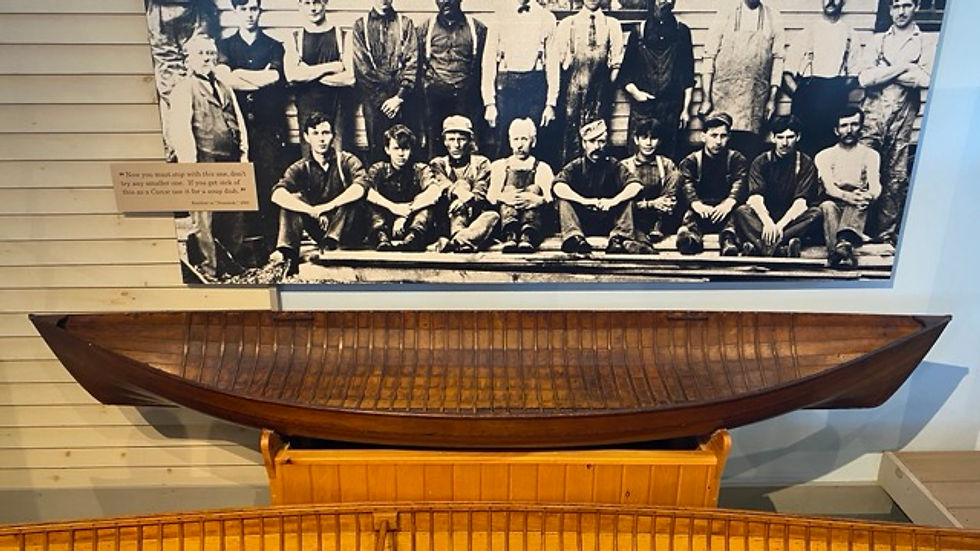
The fact that pack canoes were essentially invented here, on the same water our customers paddle today, creates a special heritage for these practical and appealing boats.
Seven Reasons Adirondack Paddlers Love Pack Canoes
1. They're Light Enough to Change How You Paddle
Most pack canoes weigh under 30 lbs. A Swift Cruiser 14.8 in Carbon Fusion comes in around 24 lbs. To put that in perspective: a typical plastic recreational kayak weighs 45–60 lbs. A plastic tandem canoe can hit 75–80 lbs.
That weight difference changes everything — not just the portages, but the whole day. Loading the car alone. Walking it to the put-in. Lifting it over a beaver dam. Going out after work because pulling the boat down takes thirty seconds, not twenty minutes and a strained back. Light boats get paddled more. That's the whole point.
2. Getting In and Out Is Genuinely Easy
No cockpit. No spray skirt. No squeezing yourself into a boat that requires a specific combination of flexibility, technique, and composure — and then managing a slightly undignified exit at the dock.
You walk up, place one hand on each gunwale, and sit down. That's it. For paddlers who've stepped back from kayaking because of bad knees, a back that doesn't cooperate anymore, or mobility that's changed — a pack canoe is a revelation. It's also the answer we give almost every time an older paddler walks in and says they're not sure kayaking is going to work for them anymore. It usually works.
3. The Seat Is Actually Comfortable
This sounds like a minor point. It isn't. Most people who don't paddle think kayaking is sitting and drifting. Anyone who's done a real full day on the water knows exactly what happens to your lower back around hour four in a standard kayak seat.
Swift's pack boats come fitted with the same high-back, gel pad seat across the entire Cruiser range. It's widely regarded as one of the finest production paddling seats available anywhere. Fully adjustable back support with lumbar cushion and foot braces to engage your core properly. Eight hours in this seat feels genuinely different from eight hours folded into a cockpit.

4. Your Gear Is Right There
Pack canoes have no hatches because they don't need them. The entire interior of the boat is open and accessible. Pack in, pack out. Grab your camera when the heron lifts off. Reach your lunch without stopping. Reorganize your dry bags mid-lake when the weather changes and you need your rain jacket before anything else does.
For multi-day trips especially, this matters. You're not fighting day hatch covers or trying to remember which compartment you put the dry bag with the first aid kit in. Everything is in front of you, visible, reachable. The whole interior is yours to work with.
What if it rains? Dry bags are your friend! Protect your gear with dry bags or a waterproof backpack.
5. They Paddle with Kayak Efficiency — Without the Cockpit
Double-blade paddle. Foot braces. Clean forward-stroke mechanics. Pack canoes give you all the efficiency advantages of kayak paddling without enclosing you in a cockpit. Most recreational kayak paddlers pick them up immediately — same paddle, same motion, but the boat feels more spacious and considerably less committed.
They track well, maneuver easily, and reward a good forward stroke without punishing an imperfect one. The low bucket seat gives you a lower center of gravity than a traditional canoe seat, giving you better initial stability, a more relaxed feel, and a paddling position that reduces fatigue on longer days.
6. They Open Up Routes Most Boats Can't Reach
Half the battle of an Adirondack paddling trip is logistics: carries, shuttles, getting to water that most visitors never find. A 24-lb pack canoe changes the portage calculation entirely.
The Seven Carries felt too far to bother with? Worth it now. Long Pond out of reach because of the 1/4 mile carry to the water? Not a problem. The St. Regis Canoe Area has 58 ponds connected by carries. Most of those portages were designed for exactly this category of boat, over a century before the modern composite pack canoe existed. Pack canoes unlock the Adirondacks in a way that heavier boats simply don't.
7. They Are Beautiful Boats
Pack canoes in composite construction are some of the finest-looking boats on the water, and Swift's pack boats in particular come in finishes that make other paddlers slow their stroke and stare. The vibrant color finishes of the Kevlar Fusion boats or the stylish understated beauty of the Carbon Fusion finishes will turn plenty of heads on your travels.

Pack Canoe vs Kayak — What's the Bottom Line?
The paddle is the same. The sitting position is similar. But the experience is different in ways that matter.
Choose a pack canoe if you want easy, confident boarding and exit with no cockpit to manage; open access to all your gear without hatches; a lighter boat that's easy to carry and car-top alone; or if mobility concerns make cockpit entry difficult. Pack canoes are also the better call for multi-lake trips with portages, for paddlers who fish or take photos from the boat, and for anyone who wants to spend a full day on the water without their back complaining.
Choose a kayak if you want maximum hull speed on open water, built-in spray protection in rough conditions, or you specifically prefer the enclosed cockpit feel. For most Adirondack paddling, which is predominantly sheltered lakes, ponds, and rivers, a pack canoe handles everything you need it to handle.
Why Pack Canoes Suit the Adirondacks Perfectly
The Adirondack paddling landscape was practically designed for pack boats. The St. Regis Canoe Area has 58 ponds connected via carries. It was built for exactly this category of boat, over a century before modern composite construction made them this light. The Saranac Lakes Wild Forest, the Raquette River corridor, the carries between the Lower Saranac chain. These are routes where the difference between a 24-lb pack canoe and a 55-lb kayak is something you feel in your shoulders at the end of the day, and in your willingness to do it again tomorrow.
The Adirondack paddling environment is also predominantly sheltered. You're on lakes, ponds, and rivers, not open ocean or exposed Great Lakes crossings. That plays directly to the pack canoe's strengths: light, maneuverable, confident on flat to moderate water, able to access remote ponds that heavier boats make impractical. Nessmuk worked all this out in 1880. The boat hasn't changed that much since.
Pack Canoes — What We Carry
Head over to our dedicated Pack Canoe page to see the models we stock, specifications, pricing, and current inventory.
Ready to try a pack canoe for yourself? Come down to the store at 8 Church Street in Saranac Lake for a free test paddle on Lake Flower. Come in anytime we are open, no pressure, no obligation. Just show up and we'll have a boat in the water for you. You can also book a demo slot online if you prefer. We’ve matched a lot of paddlers to their boats over the years. Come to see you and we'll help you find yours.
Frequently Asked Questions About Pack Canoes
Can you use a pack canoe in the rain?
Yes. You're not enclosed, so you'll get some spray in sustained wind, same as any open boat. Most pack canoe paddlers use dry bags for gear, exactly as they would with a canoe. A paddle jacket keeps you comfortable in wet weather. In the Adirondacks, where summer showers are routine, this is a non-issue with basic preparation.
How do pack canoes handle in wind?
Better than most people expect. The low-profile hull and low bucket seat keep your center of gravity down, and you can use body lean to manage crosswinds effectively. In serious open-water conditions on large exposed lakes, a longer performance kayak hull will outperform a pack canoe. For typical Adirondack paddling on lakes, ponds, and rivers, pack canoes handle wind well.
Are pack canoes good for beginners?
Very much so. Initial stability is excellent and the low seat keeps you planted. Boarding is completely intuitive. The double-blade paddle is easy to pick up. Many customers who try a pack canoe for the first time expect it to feel tippy or strange; almost all of them are surprised by how natural and confident it feels immediately. Stable enough for a first-timer, capable enough for the paddler who knows exactly what they're doing.
What paddle do I use with a pack canoe?
A standard double-blade kayak paddle is typical. Shaft length depends on the boat width and your height and we can help you dial in the right fit for you at the shop. A carbon fiber paddle makes a noticeable difference in a lightweight pack canoe setup; the combination of a light boat and a light paddle is genuinely addictive once you've experienced it.
Some people do prefer to paddle a pack canoe with a single blade (traditional canoe paddle) and certain models do lend themselves towards this. The Swift Cruiser with its pronounced tumblehome design works particularly well for this. A shorter paddle is better due to the lower seating position.
What is the weight capacity of a Swift pack canoe?
It varies by model. For example, the Cruiser 14.8 handles up to around 280 lbs optimally (including gear). The 15.8 and 16.8 have more capacity for bigger paddlers or multi-day expedition loads (up to 360 lbs optimal load). If you're not sure which size is right for your build and intended use, come try a couple on Lake Flower. That's the best way to know, and it's free.
Can I rent a pack canoe to try before buying?
Yes, we rent pack canoes by the calendar day. Some customers like to take a proper trip in a pack canoe before committing to a purchase, and this is a great way to extend your test paddling experience. Head to our Rentals page or just give us a call to arrange at (518) 891-7450.
We've been putting people on Adirondack water for over 25 years. Pack canoes are one of the things we know best and love talking about. Come in, try one on Lake Flower, and see for yourself what all the fuss is about. Adirondack Lakes & Trails Outfitters — 8 Church Street, Saranac Lake, NY. (518) 891-7450.
